this is a living document, continually refined with constructive feedback
Housing is a Right, not a privilege.
TL;DR
- Shift public conception of away from property as asset.
- Upfront, zero-interest loans to buy and renovate all types of vacant, abandoned and derelict properties into homes.
- Loans convert to grants after 10 years for owner-occupiers living in the property as their primary home.
- Loans stay interest-free and non-repayable for civic landlords so long as the property is RTB registered, stays affordable rent, and the landlord has no more than three rental properties of any kind in total.
- Broadens the definition of a first-time buyer.
- Mixed-use planning in new builds with everyday aesthetics at the forefront of design for well-being and community health.
- Expand tenants’ rights further to include stronger protection against discrimination.
- Use a combination of Scottish,Vancouver, and NYC models to reign in the “Airbnb problem”.
Housing is a right
Ireland’s relationship with housing has been distorted by a destructive, hyper-individualistic mindset in the last 30 years. A mindset with no roots in Irish culture and heritage. Shelter, a fundamental human need and a community anchor, has been reduced to a financial asset, a gamified investment vehicle, and a hollow status symbol.
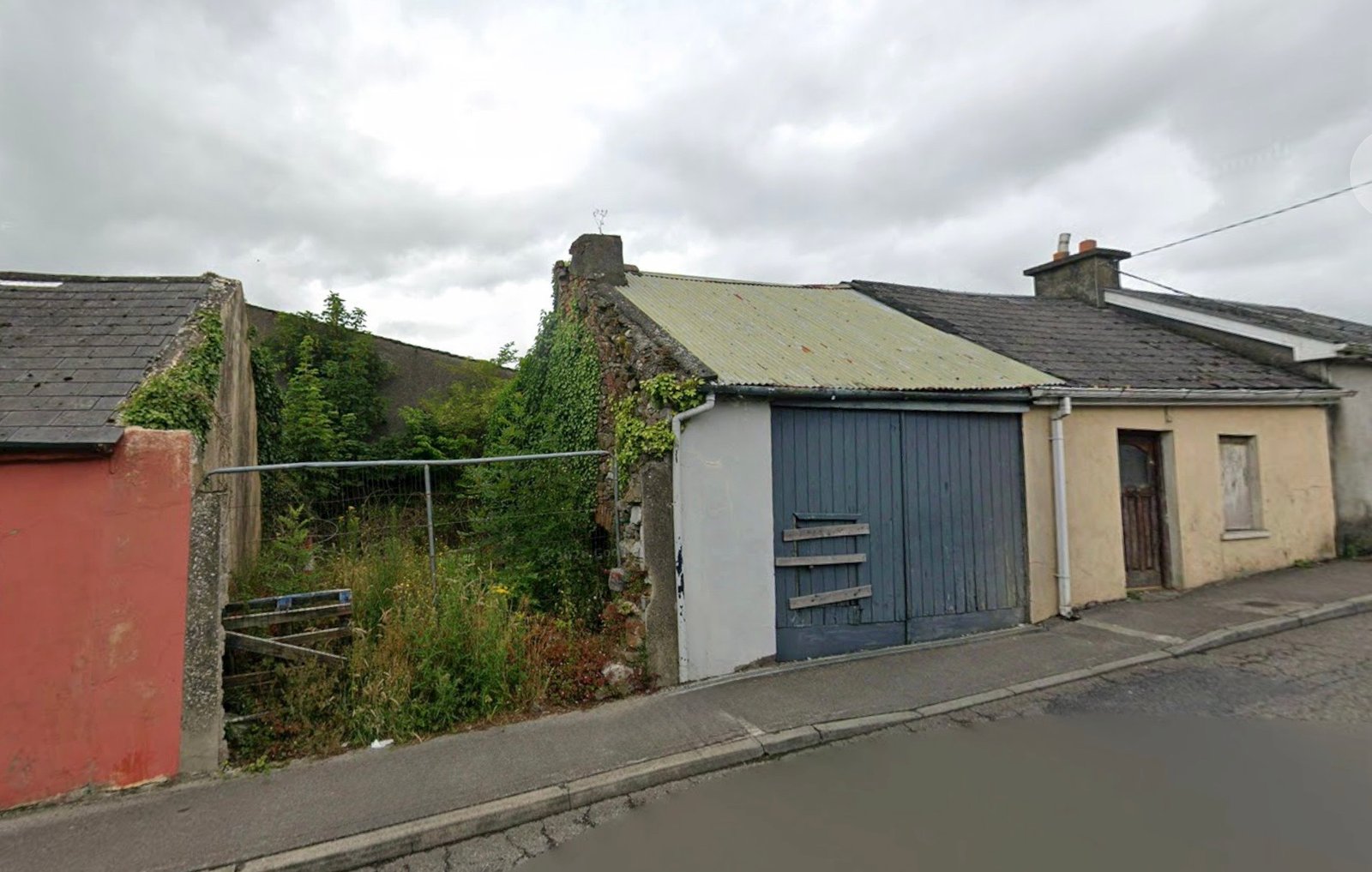
This speculator’s culture has left our country blighted with dereliction and abandoned structures while locking an entire generation out of stable future. Rather than renovate or add-on, so many historic and older properties have been abandoned, left to rot. These houses could be given new life by families in need of homes.

We reject the idea that a crisis created by the market, greed, and lack of care can only be solved by further incentivising profit extraction… or by punishing landlords. Punishing a cultural mindset will get us nowhere. This is the logic of the market feeding itself, us. Housing is a right, not a financial tool. And a home is our heritage, a symbol of care, and a commitment to one another.
Most of all, a home is a commitment to families and future generations to come.
WE HOLD THAT
- Housing is a fundamental social right.
- A cozy, secure, and affordable home is a public necessity; economically, environmentally, and socially.
- Housing is the community heritage we live within.
- Homes exist for ALL.
The Irish government has made a good start on whole, but its policies and initiatives do not go far enough, or far enough in the right direction. And critically, do nothing to change the culture surrounding housing.
This Manifesto is a radical structural, financial, and cultural statement. By combining up-front government funds with cultural and historical restoration, we can dismantle the predatory landlord markets, expand the definition of ownership, and breathe life back into our shared heritage. To do so, we need to shift Irish understanding to housing as home. And to being a landlord is an act of care and stewardship. Housing is not a financial unit on a spreadsheet. Home is the bedrock of Irish culture and society.
A Civic Heritage Model
1: Up-Front Capital
Current government housing initiatives like renovation grants after repairs fail because they demand that those in most need, with the least capital, front sums of the money they simply don’t have. Providing grants in arrears de facto allocates our housing stock to those with means and connections, wealthy investors.
- The government will establish a Civic Restoration Revolving Fund. Capital for structural, health, and safety renovation and purchase will be advanced as a zero-interest loan, bypassing commercial banking entirely.
- The Civic Landlord Covenant: Up-front capital with a minimal deposit will be extended to individual property owners on two non-negotiable conditions: 1. The property is registered with the Residential Tenancies Board (RTB) and rented at a Fair Market Index that is directly tied to local median wages. The loan remains interest-free so long as the landlord rents within the covenant and maintains the property to standards. It is repayable upon the future sale of the property. 2. The landlord is an individual and can only hold a small maximum number of properties of any kind for rent, no more than 3.
- The Second-Chance Grant: The legal definition of a "First-Time Buyer" will be expanded to a Fresh Start definition: any individual who has not owned a home globally within the last 3 to 5 years, is legally resident in Ireland with an established connection to a local area, or is and Irish citizen wishing to return home. This empowers the divorced, lone parents, returning emigrants, and victims of past recessions. These up-front, no and low interest loans for down payment assistance, purchasing and renovating derelict and abandoned properties will have three components,
- 1. no to low deposit (income dependent) and
- 2. low interest purchase loan and
- 3. no interest renovation loan.
- The deposit assistance and renovation portions will convert into grants after the home is occupied as the owner’s primary residence for no less than 10 years. Both become repayable if the property is sold before the 10 years are up, or is no longer occupied as a primary residence.

2: Reclaiming Housing Inventory
Fair housing is not built on artificial scarcity driven by speculative hoarding or legal apathy. i.e. real estate investment trusts must go
- Local authorities (communities) will aggressively issue and execute Compulsory Purchase Orders (CPOs) on any buildings and properties, irrespective of age, left vacant or derelict for over 24 months. Increasing the use of an existing policy, local authorities will do so in a timely and streamlined fashion. The owner will be first offered the Civic Landlord route. If this offer fails or is rejected, the CPO option will kick in.
- Once titles are legally cleared by the appropriate authorities and methods, these properties will bypass open speculative markets and be funneled directly into the (community) Civic Heritage lottery pool, reserved exclusively for First-time buyers, Second-Chance buyers, and Civic Landlords offered at cost. The buyer will be eligible to apply for the appropriate grants to purchase and renovate the property.

Sherry, J., & O’Connor, F. (2024). This is Derelict Ireland 2: The Solutions. ResearchGate. https://www.researchgate.net/publication/387866699_This_is_Derelict_Ireland_2_The_Solutions
3: Changing Public Perception of Property and Housing (Cultural Ad Campaign)
To shift the societal consciousness away from "property as status," the national government will launch a sustained, and full-on national media and public arts campaign. Local authorities will do the same, focusing on their own context and communities.

- The ideals and vocabulary of the "Celtic Tiger" - yields, flipping, portfolios, and market-clearing rates - will be culturally reframed. The campaign will invite people to imagine how they would do up their own derelict property, for themselves or others, as care and long-term hospitality.
- Public messaging will champion the ancient Irish philosophy of Meitheal (community coming together to help). True civic status will no longer be measured by the monetary value of an extracted portfolio, but by an individual's contribution to the community fabric.
This campaign is the foundation of all else in this manifesto. Until we ask people to imagine what life could be with cozy, secure, and affordable housing… the government will not change direction fast enough or go far enough to ensure our fundamental right to home.
4: Trade Apprenticeships
To prevent up-front state funding from triggering an inflationary spiral in construction costs, funding will be linked to the domestic trades revival.
Acceptance into the Civic Heritage financing scheme will mandate that a minimum percentage of the restoration work be contracted through local trades and apprentices, and traditional conservation programs. The national government and local authorities will further create training programs as necessary to meet this need. This pillar directly addresses the national skills shortage while preserving historic masonry, carpentry, and building methodologies.
New and Existing Rental Stock
In addition to renovating derelict and abandoned homes, local authorities and the national government will continue to build new social housing to meet the needs of local families and individuals.
These will be a continued mix of Cost Rental and Local Community Housing Service buildings, with increased funding and speed up the current nationally acknowledged sluggish timelines. These builds are not for profit, for anyone, as they are our civic duty to our communities.
Planning regulations and processes will be implemented that favor speed AND safety, while ensuring that the importance of everyday aesthetics in design and planning are the core of each build.
Cozy Homes?
It is one things to build structures, it is another to build homes and communities. Insisting that New Builds are … is the way forward out of this mess.
- safe and solid,
- energy efficient,
- making good use of green technologies like solar (and others), and are
- filled with natural light, and
- built as communities with a mixture of homes, services, and retail
Hospitality The “Airbnb” Problem
The National Planning Statement on Short-term Letting barely touches the problem it proposes to solve. More aggressive measures are needed to keep the Irish culture of hospitality, and not lose homes to greed. So many towns and villages have “vacant homes” most of the year because they are holiday lets, only occupied during the tourist season, several short stays at a time.
Some landlords will rent the home during the off season, only under the condition that the renter vacate the property during the tourist season. So the landlord can maximize profits. Leaving a family functionally homeless, with insecurity and instability. Making a bad situation exponentially worse.
Several countries and localities are taking measures to address this most egregious example of housing as profit. Ireland need to further its current efforts and learn from enforced legislation in:
Control Zones - Scotland
Mandatory licensing of short-term rentals, established control areas to require planning permission for short-term lets.
Registration and Primary Residence Requirements - New York City, USA and Vancouver, Canada
Requires a short-term rental of fewer than 30 days to be registered with the city, be occupied by the homeowner as their primary residence, and prohibits short-term rentals of a whole home for fewer than 30 days.
License and Ban - Barcelona, Spain
A final example, Barcelona, Spain requires a license for short-term renting.They are issuing no new licenses, and have announced a total ban on short-term rentals starting in 2028.
We urge the Irish government to take stronger measures such as the above and
- Require registration or a business license for short-term rentals.
- Require the homeowner to live in the property as their primary residence.
- Ban short-term lets of a whole home.
- Offer current owners of multiple short-term lets to sell homes that are not their primary residence to covenant landlords or become covenant landlords themselves.
THE CIVIC OATH
We resolve to transition Ireland from a nation of insecure tenants and speculative wealth extractors to a republic of custodians and communities. We believe that restoring a rotting 18th or 19th-century cottage, a vacant village house, rundown city apartments, or a village "above-the-shop" space is a profound act of care that deserves social respect and support. We reclaim our history from decay, and in doing so, we secure our future - Home for all.
Anti-discrimination Clause
No prospective tenant or buyer, in any scheme, shall be turned away or denied on the basis of family status, race, religion, gender, source of income, occupation, (dis)ability, ethnicity, pregnancy status, criminal history, immigration status, sexual orientation, veteran status, housing status, rental debt, credit history, eviction history, survivor status, or for having pets. Home for all means, HOME FOR ALL.
As such, this tenant’s rights policy will be rolled out in a Tenants’ Bill of Rights to apply to all rental housing across Ireland within one year.

Policy Precedents
The most favorable terms were borrowed and adapted to an Irish context from each of the following policies currently or previously in practice.
City of Frederick. “Sold on Frederick Loan Program.” City of Frederick, Maryland. (USA) https://hhs.cityoffrederickmd.gov/129/Housing-Counseling-Office
City of Frederick. Sold on Frederick Homebuyer Assistance Program: City of Frederick, Maryland. (USA) https://www.cityoffrederickmd.gov/416/Community-Development-Resources
City of Vienna. “Flat Types: Privately Owned Flats, Subsidised and City-Owned Flats.” City of Vienna, 2026. (Austria) https://www.wien.gv.at/en/housing/flat-types
Housing & Development Board. “Fresh Start Housing Scheme.” HDB, 2026. (Singapore) https://www.hdb.gov.sg/sitecore/content/hdbinfoweb/home/buying-a-flat/bto-sbf-and-open-booking-of-flats/process-for-buying-a-new-flat/application/fresh-start-housing-scheme
Virginia Department of Housing and Community Development. Community Development Block Grant Program Design Manual. Commonwealth of Virginia, 2026. CDBG Program Design Manual (USA) https://www.dhcd.virginia.gov/sites/default/files/DocX/cdbg/final-cdbg-program-design-manual.pdf
Government of New Brunswick. “Affordable Rental Housing Program.” Government of New Brunswick, 2026. Affordable Rental Housing Program (Canada) https://www.gnb.ca/en/topic/family-home-community/housing-property/rental-housing.html
BC Housing. “Secondary Suite Incentive Program.” BC Housing, 2026. Secondary Suite Incentive Program (Canada) https://secondarysuite.bchousing.org/
Canada Mortgage and Housing Corporation. “Seniors to Benefit from Renovation Funding and Mortgage Loan Insurance Enhancements.” Government of Canada, 2005. CMHC — Renovation Funding and Secondary Suites (Canada) https://www.canada.ca/en/news/archive/2005/05/seniors-benefit-renovation-funding-mortgage-loan-insurance-enhancements.html
Housing & Development Board. “Fresh Start Housing Scheme.” HDB, 2026. Fresh Start Housing Scheme (Singapore) https://www.hdb.gov.sg/sitecore/content/hdbinfoweb/home/buying-a-flat/bto-sbf-and-open-booking-of-flats/process-for-buying-a-new-flat/application/fresh-start-housing-scheme
Office of the Mayor, City of New York. “News.” NYC.gov. City of New York, 2026. https://www.nyc.gov/mayors-office/news - policies and expediency of governance. (USA)
Public Communication Campaigns
Institute for Liberty and Democracy (ILD). “¿Qué haría yo si tuviera capital?” Administrative Simplification, Instituto Libertad y Democracia. ILD. (Peru) https://www.ild.org.pe/about-us/history/success-stories
The “What would you do if you had capital?” advertising campaign discussed on Planet Money “Summer School 1: A government’s role in the economy is to make us all richer?” NPR (Peru) https://www.northcountrypublicradio.org/news/npr/1255376133/summer-school-1-a-government-s-role-in-the-economy-is-to-make-us-all-richer
Office of the Mayor, City of New York. “@nycmayor.” Instagram. @nycmayor on Instagram - communication and policies. (USA)
Everyday Aesthetics and Well-being
Architizer. “How Residential Architecture Can Impact Your Health.” Architizer. https://architizer.com/blog/inspiration/collections/how-residential-architecture-can-impact-your-health/
Ramachandran, V. S., and William Hirstein. “The Science of Art: A Neurological Theory of Aesthetic Experience.” Journal of Consciousness Studies, vol. 6, nos. 6–7, 1999, pp. 15–51. Imprint Academic. https://www.researchgate.net/publication/233556531_The_Science_of_Art_A_Neurological_Theory_of_Aesthetic_Experience
Tranel, Ben. “The Future Is Mixed Use: How Principles of Mixed Use Design Will Restore Our Communities.” Gensler, 27 Jan. 2025. https://www.gensler.com/dialogue/28/in-the-mix
Urban Land Institute, 2023. The Benefits of Mixed-Use Developments. Available at: https://www.uli.org/research/benefits-of-mixed-use-developments/
Short-term Rental Legislation Precedents
Scotland. “Planning Permission and Control Areas for Short-Term Lets.” mygov.scot, 2025. https://www.mygov.scot/short-term-let-licences/planning-permission-control-areas
New York City. “Rules Governing Registration and Requirements for Short-Term Rentals.” City of New York, 2023. https://www.nyc.gov/assets/specialenforcement/downloads/pdfs/FINAL-RULES-GOVERNING-REGISTRATION-AND-REQUIREMENTS-FOR-SHORT-TERM-RENTALS.pdf
City of Vancouver. “What Residents Need to Know About Short-Term Rentals for Summer 2026.” City of Vancouver, 14 Oct. 2025. https://vancouver.ca/news-calendar/short-term-rentals-for-next-summer-oct-2025.aspx
Renters’ Rights
United Kingdom. Renters’ Rights Act 2025, c. 26. legislation.gov.uk, 2025. Renters’ Rights Act 2025 https://www.legislation.gov.uk/ukpga/2025/26/contents
New Zealand. Residential Tenancies Amendment Act 2024, No. 52. New Zealand Legislation, 2024. Residential Tenancies Amendment Act 2024 https://www.legislation.govt.nz/act/public/2024/0052/latest/whole.html
New South Wales. Residential Tenancies Act 2010, as amended by the Residential Tenancies Amendment Act 2024. NSW Government, 2025. Residential Tenancies Act — Pets https://www.nsw.gov.au/housing-and-construction/rules/pets-rentals
Scottish Parliament. Housing (Scotland) Act 2025, asp 7. legislation.gov.uk, 2025. Housing (Scotland) Act 2025 https://www.legislation.gov.uk/asp/2025/7/contents
National Low Income Housing Coalition, National Housing Law Project, and Tenant Union Federation. (2024). The National Tenants Bill of Rights. https://nlihc.org/sites/default/files/TBOR-Final.pdf
Maryland Department of Housing and Community Development. (n.d.). Tenants’ Bill of Rights. https://dhcd.maryland.gov/housing/renter-landlord-resources/tenants-bill-rights
Hidden Homeless in Ireland
The Journal. “The Housing Essay: Disability.” TheJournal.ie, Oct. 2026. https://www.thejournal.ie/the-housing-essay-disability-7177250-Oct2026/
RTÉ. “Homeless Focus Ireland.” RTÉ News, 22 June 2026. https://www.rte.ie/news/ireland/2026/0622/1579783-homeless-focus-ireland/
Maynooth University. Ireland’s Hidden Homelessness Crisis. Maynooth University. https://www.maynoothuniversity.ie/sites/default/files/assets/document/Ireland%E2%80%99s%20Hidden%20Homelessness%20Crisis.pdf
[This manifesto solely addresses housing.
Housing, as we know, is inextricably intertwined with effective public transportation.
Fast trains, trams and electric busses that not only connect cities to each other with efficient and timely service, but underserved rural areas as well, is essential to solving the housing crisis.
When people can rely on public transport to get from home to each other, work, shops, recreation, and services… then a wider range of housing options and locations are thrown open to all.]